INDIANAPOLIS – Lexi Poindexter[1] was a vibrant and caring mother, the voice of wisdom for her sister, an active member of her community and a present and loving daughter.
So when she died days after giving birth to her second child, it crashed through her community like a tidal wave, tearing apart those she loved.
“Our hearts are shattered. Our lives are shattered,” said her father, Rich Brown. “It’s going to take a long time for them to heal.”
Linton, Indiana, where Lexi’s family is from and where she gave birth, is a community of about 5,000 people. The town where she lived — Bloomfield, about 20 minutes away — is only half that size.
When tragedy happens here, it affects almost everybody — family, clients, neighbors, the nurses that cared for her.
It’s been more than two years since Lexi died in March 2019, and it’s clear now to see her impact. Her untimely death spurred changes at her local hospital and led to increased resources for mothers and pregnant women. Lexi’s experience may also have saved her sister’s life.
More in this series: 'Obstetric deserts' threaten lives of pregnant people, amplifying maternal mortality in rural Indiana[2]
It's also given her family a new mission: Tell Lexi’s story so that other women know how dangerous childbirth can be, and hope that it saves them.
“I want people to be educated,” said her mother, Michelle Brown. “We don’t want anybody else to be hurt by this. We want lives to be saved because of what we lived.”

Not everybody finds their passion in life, but Lexi did.
Even while growing up, she loved cutting hair. She cut hair for her two sisters, Isabelle and Tori, in high school, and was the go-to stylist for her friends going to prom.
“She was just crazy about doing it, even before she was trained to do it,” Tori said.
After graduating from high school in 2009, she went straight to Aveda Fredric’s Institute Indianapolis, a cosmetology school in Carmel. Shortly afterward, she was working at the front of a salon in Bloomington.
Then, she met Logan Poindexter. They fell in love. They were married in a wedding her parents describe like a “fairytale” from a Disney movie. Lexi came into the ceremony in a carriage, and a beautiful twist of fate — a delayed Fourth of July celebration — led to a surprise backdrop of fireworks at their wedding reception.
Throughout it all, her family says, Lexi was Lexi: passionate, kind, loving. She was committed to her faith, and unflinchingly honest.
“She lived life to the fullest, the short life that she had. It couldn’t really have been any better,” her father said. “Which makes it harder, and that makes us miss her more. But isn’t that the memory everybody would want, is that someone they lost lived an awesome life?”
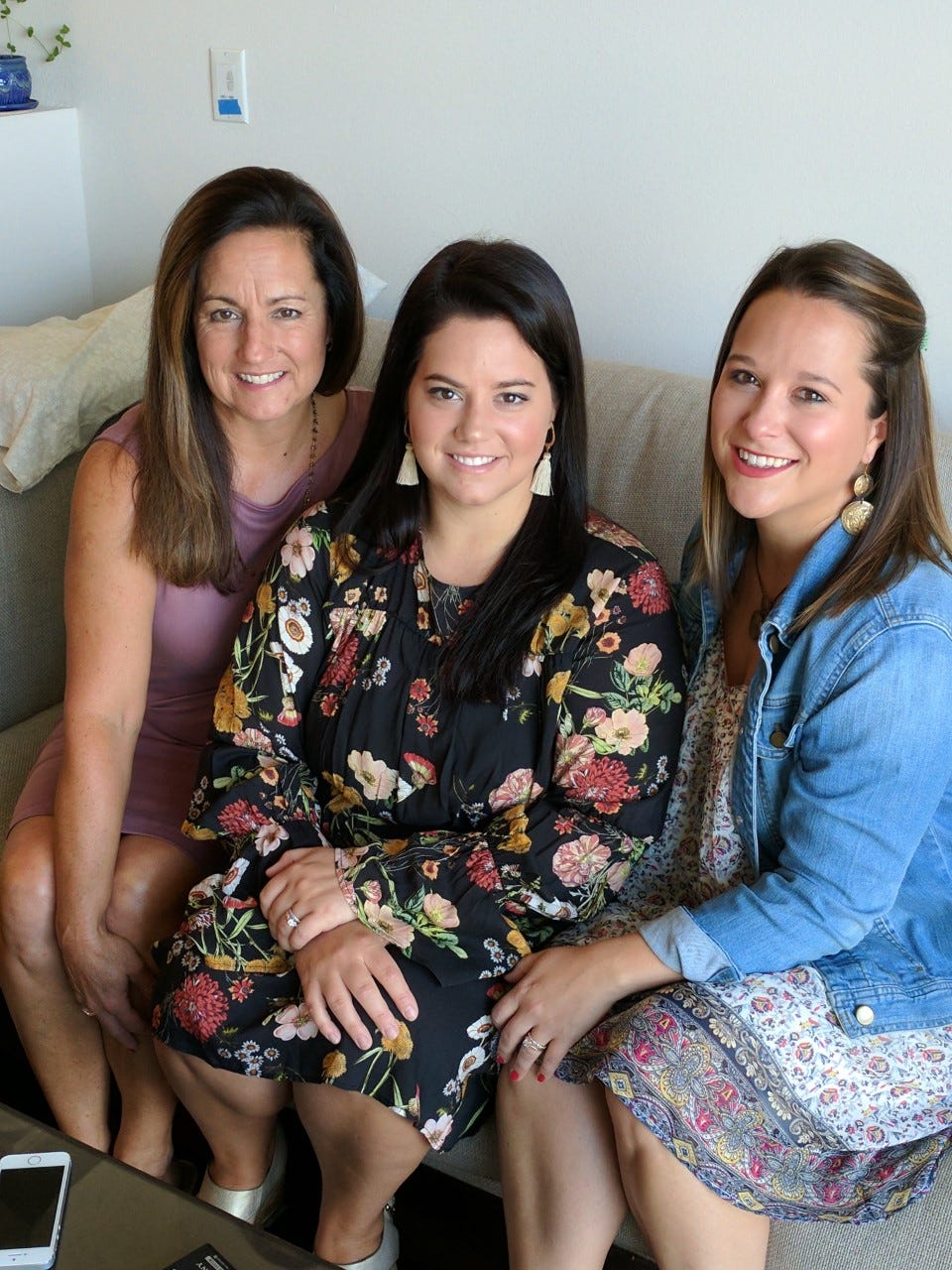

In 2015, Logan and Lexi had their first child — a sparkly-eyed little girl named Penny — and moved to Bloomfield.
Lexi seemed like a natural mom with Penny, her mother said. She laughs, remembering that if Lexi had had it her way, she probably would have had four or five kids.
“I knew from the beginning she was meant to be a mom,” she said. “She was just the best mom ever, just an amazing example and role model for her daughter.”
Though she wanted a child so badly, the path was difficult, and Lexi suffered from four miscarriages in a row. Worried something was wrong, she consulted a high-risk pregnancy doctor, but she was assured that she was healthy.
Finally, Lexi became pregnant with her son, Pruitt, in 2018. The family was overjoyed.
“He was practically a miracle baby,” Tori said.
On March 15, 2019, Lexi delivered Pruitt via c-section at the local Greene County General Hospital, the same place her daughter had been born, and where her mother had delivered her and her two sisters. She loved that hospital, and the family feels deeply connected to it still.
“For us, we kind of think it’s almost a dream team,” her mother said. “You have these people that you know personally, that are friends of yours, taking care of you.”
A few days later, Lexi came home with her newborn son, feeling healthy and happy. She rested with her family. Tori, who had flown in from Denver a few days before to spend time with her sister before the birth, flew back to Colorado.
Then, on the afternoon of the 20th, Lexi got a headache — a bad one. Even after hours of rest and ibuprofen, it wasn’t going away.
“She just started crying and said, ‘My head hurts,'” her mother said.
Her mother didn’t know what to do, so she grabbed Lexi and held her, told her she was strong and that she loved her.
“I think it was God … I think He gave me that moment with her,” Michelle said.
Lexi was the type of person to push through pain to avoid causing others problems. But the headache was too painful, and her husband insisted on taking her to the hospital.
At the hospital, doctors gave Lexi some medicine and a CT scan, but she still wasn’t feeling better. They decided to run bloodwork and do a few more tests. While they were waiting to hear the results that night, Logan and Lexi fell asleep.
Lexi never woke up.
The family rushed to the hospital; Tori booked a flight back to Indiana immediately. Hoping to get her emergency treatment, doctors tried to fly Lexi to Methodist Hospital in Indianapolis, one of only two hospitals in the state with that level of capability for treating mothers. But it was too windy for the helicopter. Instead, they had to spend hours stabilizing her for a 90-minute ambulance ride.
When Lexi finally made it to Methodist, doctors tried to bring down the pressure inside her brain. But she never responded. By the 27th, the pressure was spiking and her pupils had stopped being responsive to light. Surgeons performed an emergency craniotomy — hoping that removing a piece of her skull would relieve the pressure — but to no avail.
At that point, Tori said, it was obvious. Lexi was gone.
The small community in Linton is tight-knit, and it did what tight-knit communities do: People stepped in. In the weeks and months following Lexi’s death, her mom said, they were inundated with gifts for the kids, financial assistance, meals, breast milk, diapers and more.
Her death rippled through Greene County Community Hospital, as well. Hospital CEO Brenda Reetz said in healthcare there are cases that never leave you, and maternal mortality is one of those. She described nurses crying for weeks. Everybody was affected in some way.
Lexi died from a cranial hemorrhage, one of the leading causes of death for women who die from pregnancy and childbirth. But one thing stumps her family: Lexi didn’t have any preexisting conditions. She was healthy, and she didn’t have a history of high blood pressure during her pregnancy or in her life before pregnancy. Her death appeared to have been caused by a random fluke.
It shocked her mother, who never had complications when delivering her three children. When she searched for answers, a doctor at Methodist said only that pregnancies are dangerous. It angered Michelle.
But now, she knows pregnancy needs to be taken seriously. Since Lexi's death, every time Michelle goes to a baby shower, she asks the mother if they have one item: A blood pressure cuff. If they don't, she asks them if she can buy them one.
A blood pressure cuff may have made a difference for Lexi's sister, Tori, when she delivered her first child, a baby boy, in September. Even though the birth went smoothly and doctors insisted she didn’t need to, she monitored her blood pressure because of what had happened to her sister.
Four days later, her blood pressure skyrocketed.
Her husband drove her to the hospital, and doctors immediately put her on blood pressure medication, which she had to use for the next few weeks.
“Thank goodness she knew to be watching her blood pressure, or she never would have known,” Michelle said. “She didn’t have any symptoms.”
She avoided a tragedy, and Michelle was able to fly to Denver to stay with her for a few weeks after the baby was born. Her grandchildren, Michelle said, are reminders of the beauty in life.
“(God) gives us these little blessings we get to look forward to and be able to see, because life can be hard,” she said. “But we’ll get through it.”

Since Lexi’s death, Greene County General Hospital has launched a perinatal navigator program. Through this program, a certified nurse visits families’ homes and helps mothers weather the challenges of the first 18 months of their baby’s life. In its first year, the program served more than 200 families.
Talking about this program brings tears to Michelle's eyes. Maybe next time a mother’s blood pressure spikes, she says, she’ll know in time: Maybe she can be saved. Maybe the added emphasis will teach people to listen to their bodies. Maybe the perinatal navigator will just mean they have one more person checking in on them.
“It’s what I think we need,” she said. “We need someone there who watches out for these mothers.”
The hospital also worked with the Brown family to create the Lexi Poindexter Memorial Project, a program created in Lexi’s memory to give blood pressure cuffs to pregnant women and women who just gave birth.
Started with funds from a Facebook fundraising campaign, the program has given away more than 100 cuffs in the last year, and Michelle said they’ve heard from the hospital that a few women may have been saved from injury because of it.
“It’s just such a small thing, like it’s not complicated to check your blood pressure at home,” Tori said. “It takes like five minutes to teach somebody how to do it the right way. It’s so simple, and even if it only saves five lives out of 100, or five out of 1,000, it’s worth it.”
The tragedy of maternal mortality is that families often grapple with two polarizing emotions at once — the wrenching, life-shattering loss of a loved one and the overwhelming joy that comes with welcoming a new life into the world.
Lexi’s son, Pruitt, is healthy and happy. For his first Christmas, his grandparents gave him a drum set that he loved. They joke that he must become a drummer some day.
Penny was four when Lexi died, and struggled in the months after her mother’s death. She needed to be with people she felt safe around: her father, aunts, grandmothers and grandfathers.
“She really needs her people not to leave her,” Tori said.
After several months, Penny started opening up more and talking about her mom. Open conversations about faith and the family’s beliefs about what happens after death, Michelle said, have been beneficial in helping Penny heal.
The grandchildren have been a form of healing for Michelle and her husband. Watching Penny grow older, wiser and stronger reminds them of their daughter.
“She tells stories and says things, and it’s like, ‘Wow,’” Michelle said. “That had to come from Lexi through God.”
Through all of the good moments, the family still struggles with the challenge of raising Lexi’s children without her. Alongside Logan, they do their best to follow the guidelines she laid out in the short years of motherhood she had, to parent them in the way she would have wanted.
“We all worry that we’re going to forget something," Tori said, "or not carry on her legacy with her kids."
Oddly, six months before she died, Lexi told her family how to handle her death. She told her husband they needed to prepare for what would happen in case something went wrong. She was an organ donor, a testament to her giving spirit, her father said. She laid out instructions for how she wanted her remains to be cared for, even told her family that she wanted them to focus on her son more than anything else.
“I feel like God was telling her and preparing her, and preparing her family for this to happen,” Tori said. “She was like, “I want this baby to be loved as much as Penny is. And if something happens, it’s not his fault.’”
Months after Lexi’s death, the family took a trip to Florida. Lexi loved the beach, and it was a special place for family vacations while she and her sisters were growing up.
The family spread her ashes in the ocean, but kept some for keepsakes: For her mom, it's a necklace to wear near her heart.
There’s been a lot of healing in these last few years, but it still hurts. Recently, Michelle recalled the painful, heart-stabbing moment she realized her daughter would always be 28 years old, that her sisters, and even her children, would someday grow older than her.
“She’s 28, and that will never change. That was hard,” she said. “It’s conflicting emotions. There’s joy from Pruitt and Penny within the sorrow.”
References
- ^ Lexi Poindexter (bit.ly)
- ^ 'Obstetric deserts' threaten lives of pregnant people, amplifying maternal mortality in rural Indiana (www.usatoday.com)
from GANNETT Syndication Service https://ift.tt/3xRf0pD
Post a Comment
Post a Comment